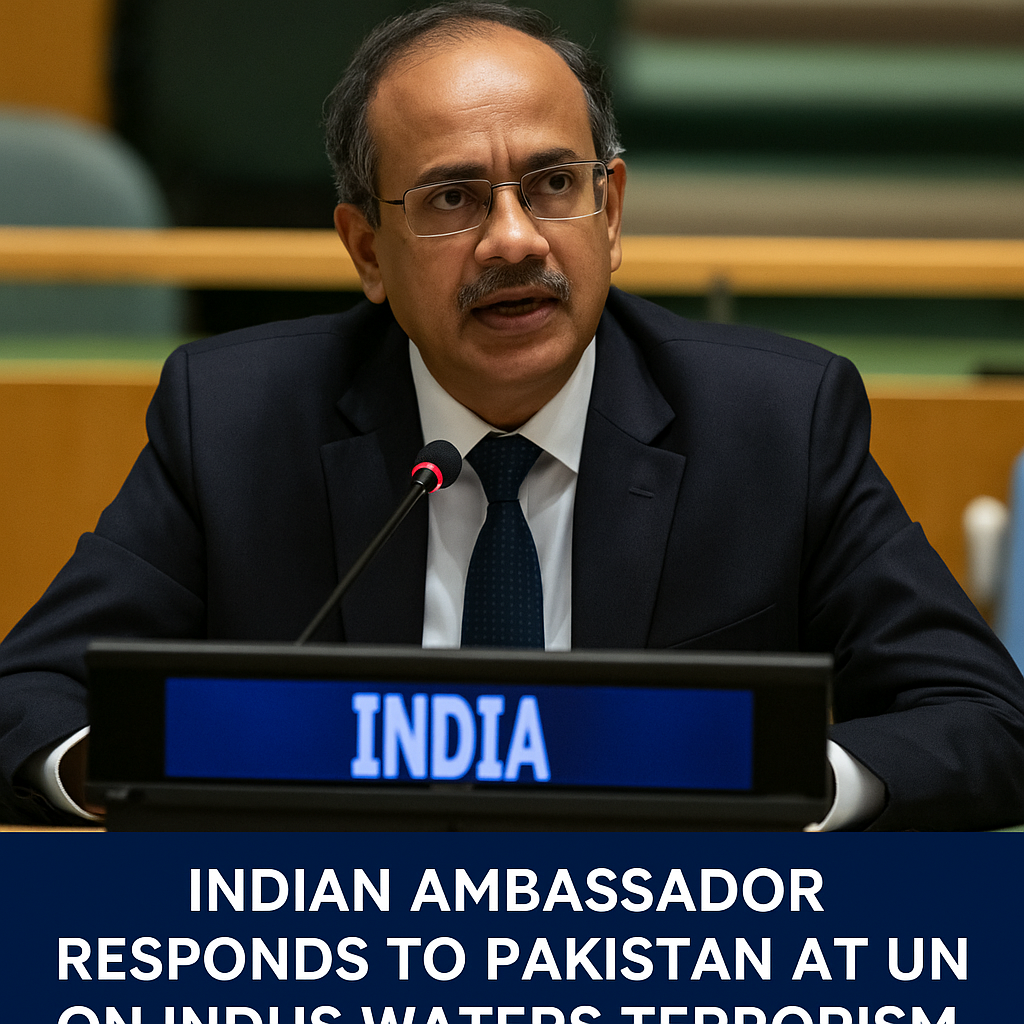
India Strongly Responds to Pakistan at UN Over Indus Waters Treaty and Terrorism Allegations
India has firmly addressed Pakistan’s recent remarks regarding the Indus Waters Treaty (IWT) at the United Nations, reaffirming its position in the wake of the brutal terrorist attack in Pahalgam, Jammu & Kashmir, on April 22 that left 26 people dead.
Ambassador Parvathaneni Harish, India’s Permanent Representative to the UN, denounced Pakistan for spreading misinformation about the IWT and reiterated that the treaty will remain suspended until Pakistan stops supporting cross-border terrorism. He described Pakistan as the “global epicentre of terror” and outlined India’s longstanding commitment to peace and responsible water sharing.
India Suspends Indus Waters Treaty After Terror Attack
India formally suspended the 1960 Indus Waters Treaty on April 23, a day after confirming that cross-border elements were involved in the deadly Pahalgam attack. The decision marks a significant diplomatic step, reflecting India’s frustration with Pakistan’s continued support for terrorist activities.
Ambassador Harish Highlights Four Key Points Against Pakistan
In his address to the UN, Ambassador Harish made four strong points to counter Pakistan’s claims:
- Breach of Trust: He reminded the international community that the treaty was signed 65 years ago in a spirit of cooperation and friendship. Yet, Pakistan has undermined its essence through repeated wars and thousands of terror attacks over the decades. Over 20,000 Indian lives have been lost to terrorism, with the Pahalgam incident being the latest.
- Terrorism as a Weapon: Harish emphasized that Pakistan’s state-sponsored terrorism threatens the lives of civilians and the harmony of India. He accused Pakistan of attempting to use terrorism to obstruct India’s growth and development.
- Changing Realities: Over the last six decades, there have been significant changes—rising energy demands, climate challenges, and shifting demographics. Harish noted that India’s responsible stance as an upper riparian nation is now hindered by Pakistan’s refusal to modernize treaty provisions in line with evolving realities.
- Dam Safety and Technological Upgrades: India pointed out that while dam technologies have advanced globally to improve safety and efficiency, Pakistan has repeatedly blocked infrastructure upgrades. This continued obstruction puts both projects and civilian lives at risk.
India’s Call for Treaty Modernization
India has requested multiple times over the last two years for discussions to modernize the Indus Waters Treaty. However, Pakistan has consistently rejected these proposals, hindering India’s ability to utilize its legitimate water rights fully.
Ambassador Harish made it clear that India’s approach has always been one of patience and goodwill, but persistent terrorism and Pakistan’s non-cooperation cannot be ignored any longer